Мәңгілік жел салтанаты
II Korkut үн өнері триенналесі
Триеннале дыбысқа және дыбысты қабылдауға арналады әрі институционалды шекаралармен шектелмей, кең диапазонды дыбыс практикалары үшін кеңістік жасайды. «Мәңгілік жел салтанаты» жобасы аясында екі ай бойы мұнда дыбыс инсталляциялары орнатылады, дыбысты қабылдау және дыбыс серуендері сеанстарын қамтитын тікелей іс-шаралар, гибридті дәрістер, пікірталастар мен шеберлік сыныптары, соматикалық перформанстар, сондай-ақ дыбыс мүлдем жоқ немесе ол мүмкін болмайтын орта мен дыбыс рәсімдерін зерттеуге жол ашылады.
«Целинный» заманауи мәдениет орталығы
Yermek Qazmūhambet

Yermek Qazmūhambet is an ethnomusicologist, researcher of Kazakh traditional musical culture, kui composer, and member of the Kui Union. He works as a senior research fellow at the folklore research laboratory of the Kurmangazy Kazakh National Conservatory, where he organizes and takes part in field expeditions collecting traditional music from different regions of the country — kuis, zhyrs, and songs. He also carries out important work on digitizing tapes, preserving unique examples of traditional music for contemporary researchers and future generations. 

Yermek teaches “Kazakh Musical Literature,” “Folk Musical Creativity,” “Transcription of Musical Folklore,” “Ethno Solfeggio,” and “Dombra” at the P. Tchaikovsky Music College. He transmits up-to-date knowledge of Kazakh traditional musical culture to his students, performers and musicologists.

He is the author of Zhas Tolkyn — a collection of original kui compositions by students of the Kurmangazy Conservatory; and Tobyl-Torgai, co-authored with akyn and historian Batyrlan Sagyntayev, which resulted from their many years of work collecting more than 150 kui in the Tobyl-Torgai region.
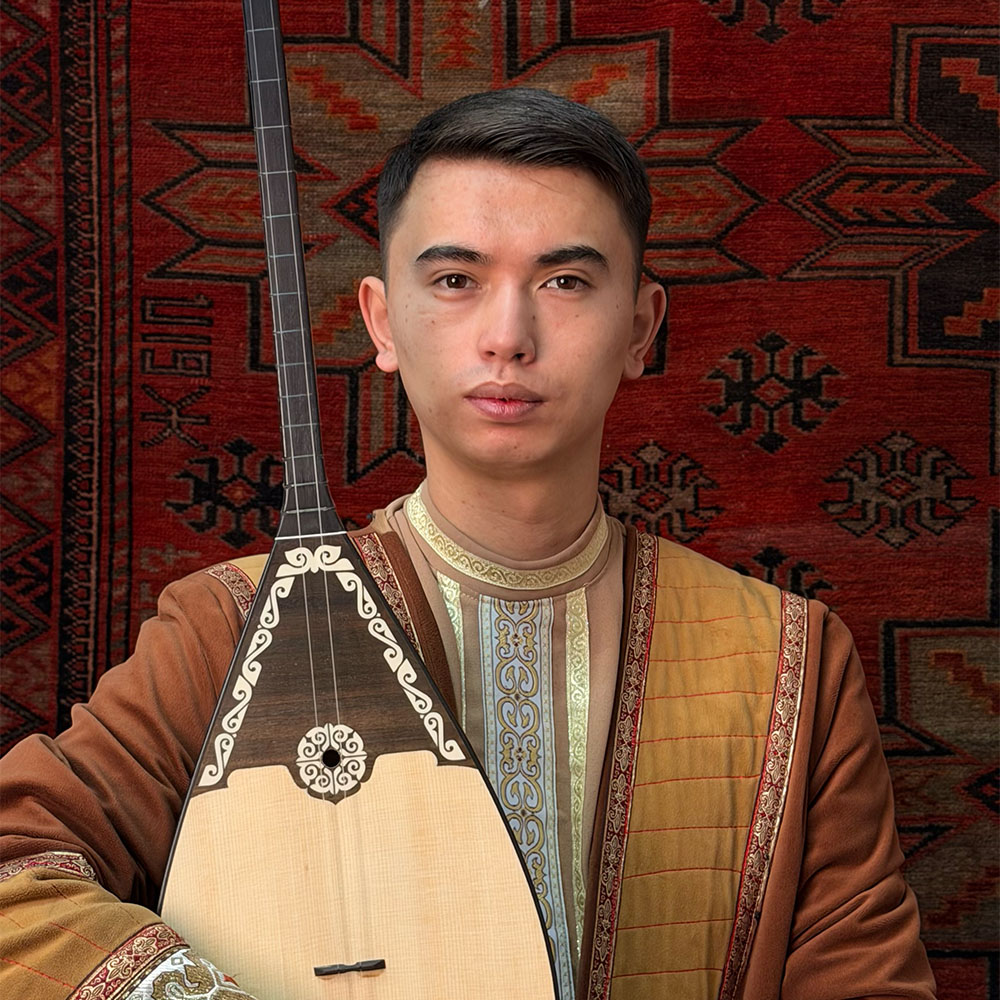
Rite of Wind and Shadow 
Performance piece (2025–2026)  

Within the framework of the Triennale, Yermek Qazmūhambet, in a duo with Ziliä Qansurá — a visual and performance artist from Bashqortostan — performs a musical piece by Mieko Shiomi. Like many of Shiomi’s works, the new piece is based on instructions — sometimes highly precise, sometimes allowing a great deal of freedom for musicians and performers to interpret. Drawing on interactions with the natural phenomena of wind and shadow, the piece is composed for traditional North and Central Asian instruments as well as the performers’ bodies, exploring the boundaries between sound and silence, light and dark, and questioning conventional ideas of what music is and the agency of those who compose and perform it.

For the Rites of Eternal Wind, Yermek has also prepared a lecture-performance that brings together his many years of research in the field of traditional music. He will speak about the musical traditions of different regions of Kazakhstan and demonstrate them through performance on the dombra.

The Seeker says: 

“There was once a scholar who found the qobyz he had been chasing for years. The instrument hung on the wall, as if calling out to him. He was warned that the qobyz belonged to a renowned baqsy and had absorbed many illnesses. But the temptation was too great. As vast as the open steppe where the wind stirs the grass above his grave.”

Бізді Instagram желісінде бақылаңыз
«Целинный» заманауи мәдениет орталығы