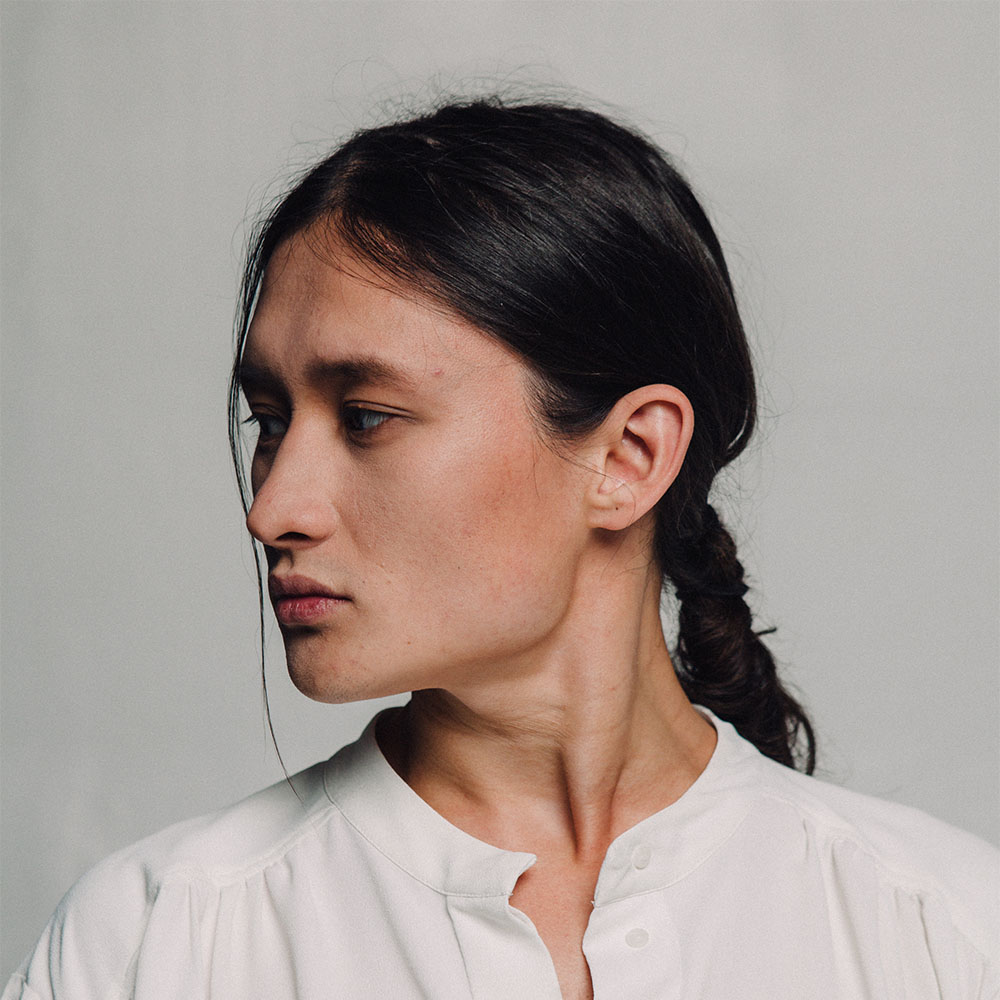
Samrat Irzhasov, also known as SAMRATTAMA, is a Kazakh musician, poet, and performance artist born in Kostanay. After completing Nariman Turebaev’s workshop on fiction cinema at Turan University in Almaty, Samrat quickly became one of the defining voices of the city’s new indie music scene. His early short videos on social media, in which he read his own poetry, went viral, and he soon found himself on stage — where his talent truly shone — showcasing his radical sincerity and explosive energy. Before long, Samrat became one of the most prominent emerging artists in the region, while remaining dedicated to his background in poetry and film direction. Alongside friends and colleagues, he also presented the SLOG poetry performance series, which consistently sold out.
Samrat’s debut LP, Hemingway in Trousers, was released in 2020 under the moniker sobakasoma via qazaq indie, an independent label from Almaty, and received high praise from critics across the region. Addressing numerous sociopolitical issues, the record musically sits between avant-garde pop and jazz — directions that shifted dramatically over the following years with the introduction of the SAMRATTAMA moniker. By combining his name with Tama, the name of his clan, this evolution marked a conceptual rediscovery of self through a deep exploration of Kazakh and, more broadly, Turkic culture. This shift also had a tangible impact on his music, notably through his recurring collaboration with The Steppe Sons, an Almaty-based Kazakh post-traditional music collective.
SAMRATTAMA’s recent works have led him into the realm of contemporary art. He presented BARSAKELMES, an inaugural performance that launched the public program of the Tselinny Center of Contemporary Culture, where he worked as the project’s curator, director, composer, and performer.