Rites
of Eternal Wind
Il Korkut Sonic Arts Triennale
Dedicated to sound and listening, the Triennale creates a space for a wide range of sonic practices without restricting them by institutional boundaries. Over the course of two months, Rites of Eternal Wind will host sound installations and live events, listening sessions and soundwalks, hybrid lectures, discussions and workshops, somatic performances and explorations of sonic rituals and environments where sound is absent or even impossible.
Tselinny Center of Contemporary Culture
Jacques Madvo

Jacques Madvo (1924–2014) was born in Armenia just a few years after the Armenian Genocide, in a region that is now part of Türkiye. His mother died during childbirth and, shortly after, his father was killed, leaving Madvo orphaned at a very young age, so he went to live with his aunt and her two daughters in Beirut. There, he grew up believing that his aunt was his mother and that her daughters were his sisters.

In his early twenties, he moved to Paris to study medicine at the Sorbonne. His studies were interrupted, however, when he became ill and was sent to the Black Forest, a mountainous region in southwest Germany bordering France, for recovery. There, inspired by the beauty of the Black Forest, Jacques Madvo began taking photographs of the landscape. Upon returning to Paris, he quit medicine and began studying opera, and later filmmaking.

In 1956, he took a job with the United Nations in Beirut and worked in the region in the following years. In 1971, Madvo directed, photographed, and produced Blown by the Wind, an experimental film composed of still images documenting Palestinian children seeking refuge in Lebanon — which was officially selected for the Venice Film Festival and won awards at the Leipzig Film Festival, as well as in Czechoslovakia and Tunis. In the same year, Madvo’s wife died in a tragic car accident. After her death, Madvo and his sons relocated to Canada, where he continued directing documentaries for educational television, alongside independent experimental projects.

The last film Madvo worked on before his death, La Mer, he considered his masterpiece. It consists of shots of the sea, captured over several years. The film was in the final stages of post-production when he died, and it was never completed.
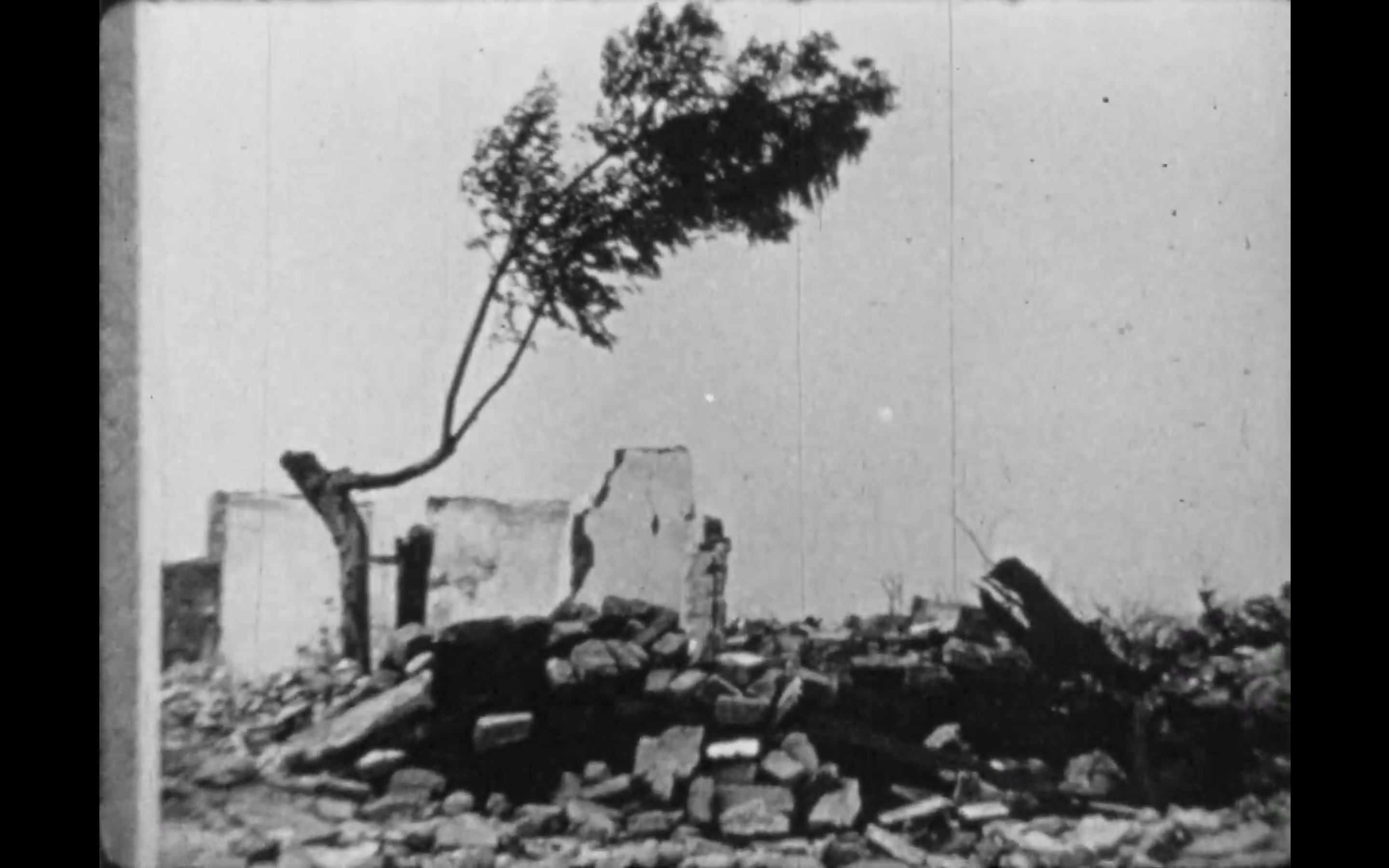
Blown by the Wind
Film (1971)

Jacques Madvo’s Blown by the Wind is a bleak yet somehow hopeful portrait of the imaginations of displaced children following the brutality of the 1967 Six-Day War. In just under 18 minutes, it tells the story from the perspective of children without childhood—of a people who were forced to flee their homes in Palestine as violence erupted between Israel and a coalition of Egypt, Syria, and Jordan.

It is less a conventional film than a documentation and collage of both real and represented experiences of Palestinians, especially children affected by violent conflict. Behind each, at times, messy painting is a child who hoped for their home to endure and their community to remain unravaged by war. In another world, these children might have turned their passion for painting into masterpieces; yet the harrowing reality is that they most likely never had the opportunity to develop their gift.

The Problem Child says:

“Some of those who have lived in pain hold a deep sensitivity to the suffering of others. Wounds left by injustice resonate in frequencies many of us cannot hear, yet it is never too late to attune ourselves to them — not to learn to recognize them, but to ensure that such wounds never appear again.”

Follow us on Instagram
Tselinny Center of Contemporary Culture